By Elena Hart · Wellbeing editor
TL;DR: Progressive muscle relaxation moves through the body one muscle group at a time, gently tensing and releasing each area to build awareness of where you hold tension. A full beginner session takes roughly 15 to 20 minutes and needs no equipment. It works seated or lying down and fits easily into an evening wind-down or a quiet break during the day.
Progressive muscle relaxation is one of the most accessible body-based relaxation habits you can pick up. It asks for nothing more than a quiet spot, a comfortable position, and a few uninterrupted minutes. The method: gently tighten one group of muscles, hold the contraction briefly, then let go and notice how that area feels in comparison.
The technique has roots in early 20th-century behavioral medicine. American physician Edmund Jacobson developed systematic relaxation work that was later incorporated into structured therapeutic approaches including cognitive behavioral therapy. PMR isn’t a wellness trend but a long-standing, well-described practice with a clear method anyone can follow.
This guide covers what a newcomer needs, including which muscles to work through, how long to hold each contraction, how to breathe, and how to fit the practice into your existing routine.
How PMR Works: The Tension-and-Release Contrast Principle
The key mechanism in PMR is not forcing muscles to relax but noticing the contrast between tension and softness. You create tension deliberately, hold it for a few seconds, and then release. That contrast between the two states is what draws your attention to areas of held tightness you may carry through the day without noticing.
That quality of attention connects PMR to broader mindfulness practice. Rather than thinking your way into a calmer state, you use physical sensation as your anchor. The VA Whole Health program includes PMR among its practical relaxation tools because the method is concrete, learnable, and gives the body something specific to do.
One important point before you begin: tension during PMR should always feel moderate and controlled. This practice isn’t about straining as hard as you can. If any area feels sore, painful, or uncomfortable, skip the contraction there and move on to the next group.
PMR Muscle Groups: Which Areas to Work Through and in What Order
A standard beginner PMR sequence moves from the feet upward through ten muscle groups: toes and feet, calves, thighs, abdomen, hands, forearms and upper arms, shoulders, neck, jaw, and forehead. Starting lower in the body lets you settle into the practice before reaching areas like the jaw and forehead, which tend to hold more noticeable tension. The JMU Counseling Center outlines a full-body sequence that follows this same feet-to-face logic, and it’s a helpful reference when you’re learning the order.
You can treat each group as its own step or combine nearby areas for a shorter session. For a quick version when time is tight, three areas cover a lot of ground: hands and forearms, shoulders, and the face.
But the feet-to-face direction is a helpful guide, not a rule. What matters is that you move through the body with some intention, visiting each area rather than rushing.
How to Start: The PMR Sequence Step by Step
Find a supportive position before you begin: sit in a chair with your back and head rested, or lie flat on a bed or mat. The Cleveland Clinic notes that physical ease is the priority: your clothing shouldn’t feel restrictive, and you shouldn’t need to hold your body up with any effort. Eyes can be open or closed. Most people find a closed-eye focus easier for body sensation, but a soft downward gaze works just as well if closed eyes feel unsettling.
Take two or three easy breaths and notice the weight of your body where it contacts the surface. Then begin with your feet: gently curl your toes and tighten the muscles around your feet. Hold for around five seconds. On your next exhale, let go completely. Pause and observe how your feet feel now. Then move to your calves, following the same pattern: tense gently, hold, release on the exhale, and pause.
Work your way upward through each group in turn, keeping the rest of your body easy while you focus on one area at a time. When you reach your face, tighten your jaw gently, hold, and release. Then raise your eyebrows slightly, hold, and let go. Finish with a few comfortable breaths and a slow, unhurried return to ordinary alertness.
Try This: Right now, make a gentle fist with your dominant hand. Hold the squeeze for a slow count of five, then open your hand and rest it in your lap. Notice the feeling in your palm and fingers as the effort clears. That shift in sensation is exactly what progressive muscle relaxation builds on, one area at a time.
PMR Timing: How Long to Hold Each Contraction and How to Breathe
Hold each contraction for around five seconds to start, and release on the exhale. You can extend toward ten seconds as the practice becomes familiar. Pairing the release with the exhale tends to make the letting-go feel more complete.
After releasing, take one or two natural breaths and allow your attention to rest on that area before moving to the next group. And you don’t need to count with precision: a slow mental one-to-five works fine.
It’s easy to hold your breath during a contraction, especially in early sessions when the practice still feels unfamiliar. If you notice your breathing has gone shallow or stopped, soften your effort slightly and return to a steady, easy breath. The practice is meant to feel manageable at every step.
Session Length and Position: Sitting vs. Lying Down for PMR
A full beginner PMR session covering around ten muscle groups takes 15 to 20 minutes at a relaxed pace. A shortened version covering three to five groups can be done in five to ten minutes and still offers a real shift in body awareness.
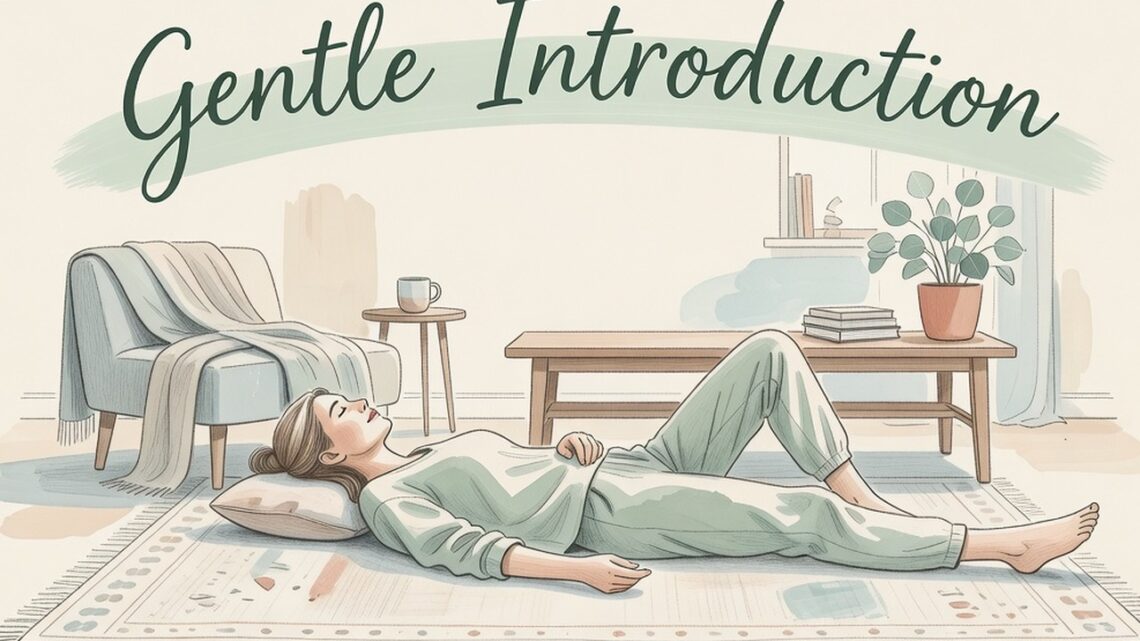
Whether to sit or lie down depends on what you want from the session. Lying flat on a bed or mat suits a bedtime relaxation practice because it supports the body’s transition toward rest. Sitting upright in a supportive chair suits moments when you want to arrive at calm alertness rather than drowsiness, for example before a meeting, after a commute, or during a post-work wind-down that leads into an active evening.
If you’re unsure which to try first, start lying down. Most beginners find it easier to release muscle tension when the body is fully supported from below, and the contrast between tension and softness tends to feel clearer in that position.
How to Build a PMR Routine: Frequency and Pairing With Other Practices
PMR needs no dedicated room, no special equipment, and no long window of time. Adding it to something you already do, like your evening wind-down or a quiet moment after arriving home, gives it a natural anchor and makes it easier to return to consistently.
Some people find a written script or an audio guide useful in the early stages. Following a prompt removes the need to remember the sequence while you’re trying to settle. Contextual Science offers a downloadable PMR guide that walks through the full-body sequence step by step, and it’s a practical starting point. After a handful of sessions, the order typically becomes familiar enough that you no longer need a reference.
PMR pairs naturally with a body scan. Both practices ask you to pay attention to physical sensation, but the body scan involves no tensing: you simply rest awareness on each area of the body in turn without creating any effort. A body scan works well when you’re already physically still but the mind feels busy. PMR tends to suit moments when physical restlessness or background tightness is the issue, because the act of tensing first gives the body something concrete to do before letting go.
Small and regular is more useful than occasional and long. Even one or two sessions a week builds familiarity with the practice and sharpens your ability to notice tension before it accumulates.
Quick Takeaways
- PMR alternates gentle tensing and releasing of muscle groups from feet to face, with attention placed on the contrast in sensation.
- Keep each contraction to about five seconds; let go on the out-breath and take a natural pause before tensing the next area.
- Lie down for a bedtime practice; sit upright when you want to feel calmer but stay alert for the rest of the day.
- A full session takes roughly 15 to 20 minutes; a shortened three-area version fits into five to ten minutes.
- Skip any area that feels painful or strained rather than pushing through it, and keep breathing steadily throughout.
Frequently Asked Questions
- What is progressive muscle relaxation?
- Progressive muscle relaxation is a body-awareness practice that involves gently tensing one group of muscles at a time, holding the effort briefly, and then releasing it. The purpose is to notice the contrast between held tension and softness, which can help you become more aware of where your body carries tightness throughout the day. It’s part of a long tradition of relaxation-based approaches used in structured therapy settings.
- How long should I hold each muscle contraction?
- A hold of around five seconds is a comfortable place to begin, and you can extend that toward ten seconds as the practice becomes more familiar. The aim is a moderate, deliberate effort rather than maximum strain. After releasing, allow a natural breath or two before you shift attention to the next area.
- Is it better to do PMR sitting or lying down?
- Both positions suit PMR well, and the right choice depends on what you want from the session. A lying-down position works naturally for a pre-sleep wind-down because the body is fully supported. Sitting upright in a chair is a better fit when you want to feel calmer but remain alert afterward, such as during a break in a busy workday.
- How long does a beginner PMR session typically take?
- Working through a full sequence of around ten muscle groups at a relaxed pace takes most people between 15 and 20 minutes. A shortened version focused on just three areas, such as the hands, shoulders, and face, can be completed in five to ten minutes and is a practical option when time is limited.
- Can I do PMR if I have a sore or injured area?
- If a particular spot feels sore, strained, or uncomfortable, simply skip the contraction for that area and move on to the next group without tensing it. PMR is meant to feel gentle and within your range at every stage, not to push through discomfort. If you have an ongoing injury or a health concern, speaking with a qualified healthcare professional before starting any new physical practice is a sensible step.
Progressive muscle relaxation is a step-by-step practice that most people can pick up in a single quiet session. Find a comfortable spot, work through the sequence at your own pace, and notice what shifts.
This article shares general wellbeing ideas for educational purposes only and is not medical advice. If you have a health concern, please speak with a qualified healthcare professional.