By Elena Hart · Wellbeing editor
TL;DR: A few pages of a calm book each evening gives your mind a gentle off-ramp from the day. Use a dim lamp, a comfortable spot, and a book with a relaxed pace. Begin with just five minutes and let the routine settle in naturally.
Reading before bed helps you unwind because your mind needs a reliable cue to slow down, and a quiet book is one of the most effective ones available. After a full day, the brain doesn’t switch off on its own. It keeps cycling through unfinished thoughts, replayed conversations, and tomorrow’s to-do list. A good book gives it somewhere else to go: somewhere absorbing but gentle enough not to generate new worries.
What Happens to Your Mind During an Evening Read
Repeating the same evening actions at the same time, such as dimming the lights, changing into comfortable clothes, or settling with a book, gradually teaches the nervous system that rest is approaching. Over time, opening a book at the same hour becomes its own cue. The routine tells the mind, quietly, that the active part of the day is over.
Bedtime reading fits into cognitive behavioral approaches to sleep hygiene, which work by building consistent pre-sleep rituals so the mind starts to associate certain cues with rest rather than alertness. You don’t need a formal programme. Doing the same small things in the same order each night is enough to start building that association.
The Sleep Foundation notes that a consistent bedtime routine, including calm, quiet activities, can ease the shift from wakefulness toward rest by giving the mind a predictable settling sequence to follow each night.
Paper Book or E-Reader: Which Works Better at Night?
A physical book has a practical edge over an e-reader at bedtime: a printed page is entirely screen-free, so there is no backlight competing with the dim, warm atmosphere that suits an evening wind-down. There’s nothing to notify you, no feed to scroll into, and no temptation to check one more thing before you close the cover.
Bright screens, especially those with a cool or blue tone, can feel alerting rather than calming. Reading on a phone also keeps the internet within arm’s reach, which works against a wind-down routine. Verywell Health recommends keeping the reading environment dim and warm regardless of format, since a calmer visual setting supports the overall mood you’re going for.
An e-reader can still work well. Lower the brightness as far as is comfortable, switch on a warm display mode if the device offers one, and put it in airplane mode so it functions purely as a reading tool. The goal is a contained, quiet experience, not a portal to the rest of the internet.
Choosing What to Read Before Sleep
The type of book matters more than people often expect. A gripping thriller or an emotionally demanding memoir can be brilliant in the afternoon, but at bedtime those genres tend to leave your mind too activated to settle easily. The best bedtime reading holds your attention without generating tension or urgency.
Gentle fiction, nature writing, poetry, light essays, and familiar rereads tend to suit bedtime well. Short chapters help too, since they give you a natural place to stop without the pull of just one more. Verywell Mind suggests choosing material that feels pleasurable rather than demanding, so reading stays connected in your mind with rest rather than effort.
Keep a small selection nearby. If deciding what to read becomes a minor daily wrestle, it makes reaching for a phone instead feel like the easier option. A few suitable titles on the nightstand removes that friction before it has a chance to derail the habit.
How Much Reading Before Bed Is Enough to Reduce Stress?
Many people who build a bedtime reading habit report feeling noticeably calmer within just a few minutes of opening a book. Even a very brief session can settle a busy mind, though individual results will always vary.
The point of reading before bed isn’t to get through a certain number of books. It’s to give your mind a gentle off-ramp at the end of each day. A modest target is far easier to sustain than an ambitious one: five minutes of reading you actually do beats thirty minutes you keep meaning to start.
Research on habit formation generally shows that small, achievable actions stick better than large aspirational ones. Let the habit grow naturally once it’s got a foothold, rather than trying to do it all perfectly from day one.
Try This: Tonight, after you have finished your usual bathroom routine, place your book on the pillow. Sit comfortably, take three slow breaths to mark the shift from doing to resting, then set a five-minute timer. Read one page at a time without rushing toward any particular scene. When the timer sounds, check in with your body. If you feel settled, close the book. If you want to continue, read for a few more minutes. The only measure of success is that you spent this time with a page rather than a screen.
Small Adjustments That Make a Bedtime Reading Routine Stick
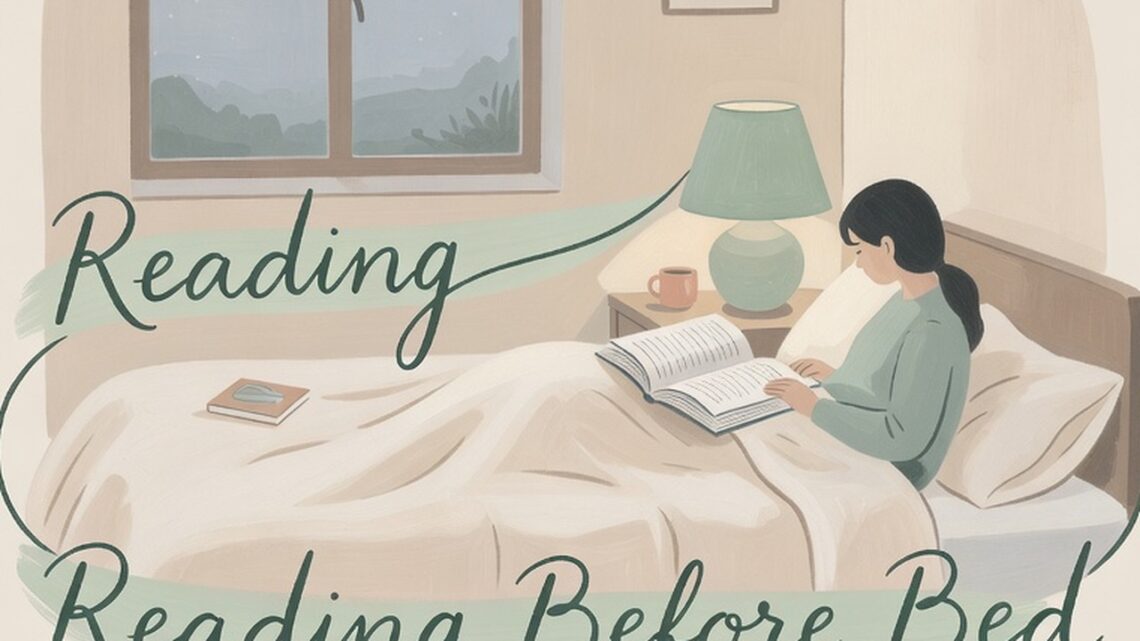
The physical setup makes a real difference. A dim, warm bedside lamp works better than bright overhead lighting. A small clip-on reading light or a warm-toned lamp on the nightstand is usually enough. The lower and warmer the light, the more settled the whole room feels.
Moving the phone out of easy reach helps more than it sounds like it should. When it’s charging on the other side of the room, the reflex to scroll becomes less automatic. This isn’t about banning the phone from your bedroom. It’s simply giving the book a fair chance by reducing the competition. Healthline suggests pairing a new habit with an existing cue, such as making reading the thing you do immediately after turning off the main room light each evening.
Deciding on your stopping point before you begin also helps. Choose whether you’ll read for fifteen minutes or until the end of a chapter. That keeps reading from sliding into a late-night marathon, and you’re more likely to put the book down while you still feel calm. If reading in bed feels too stimulating at first, try a comfortable chair instead and move to bed once you feel drowsy.
Tracking this habit doesn’t need to be elaborate. A tick on a calendar for each night you read is enough to show you how it’s going, without turning the routine into another thing to judge yourself by. Missing a night is fine. It’s just how habits work.
Quick Takeaways
- Opening a book at the same time each evening gradually trains your nervous system to treat it as a signal that the active day is over.
- Physical books remove screen light entirely; e-readers can work with low brightness, a warm display mode, and airplane mode switched on.
- Calm, gently paced material such as quiet fiction, poetry, or nature writing suits bedtime better than high-tension or emotionally heavy reads.
- A five-minute starting target is more likely to become a lasting routine than an ambitious nightly commitment you feel pressured to meet.
- Keep books visible and your phone at a distance so the easier reach at bedtime is toward the page, not the screen.
Frequently Asked Questions
- How long do I need to read before bed to notice a difference?
- Even a few minutes of reading can help many people feel noticeably calmer before bed. For most people, a window of fifteen to thirty minutes works well as a nightly target, but five minutes is a perfectly reasonable place to start.
- Does using an e-reader before bed undermine a wind-down routine?
- An e-reader does not have to be a barrier. The main risks are screen brightness and the temptation to drift into apps or notifications. Both can be managed by lowering brightness to a comfortable level, enabling a warm colour tone if the device offers one, and switching to airplane mode so it works as a reading tool rather than a connected device.
- What kinds of books are easiest to put down at bedtime?
- Books with short chapters, a calm or predictable pace, and low emotional intensity are generally easiest to set aside when sleepiness arrives. Poetry collections, gentle novels, essay anthologies, and nature writing are popular choices. Suspenseful plots and emotionally demanding narratives tend to keep the mind more active, which makes settling down at the end of a session harder.
- How do I stop myself from reading too late and losing sleep?
- Deciding on a clear end point before you begin is the most reliable approach. Choose a chapter boundary, a specific time, or a page limit, and set a soft alarm if needed. Books that don’t end chapters on cliffhangers also make it easier to close the cover when you’re ready.
- What if reading before bed does not improve my sleep?
- Bedtime reading is a general wellbeing habit that many people find helps them feel calmer before sleep, but it is not a medical remedy and will not resolve underlying sleep difficulties for everyone. If you regularly struggle to fall asleep or stay asleep, speaking with a qualified healthcare professional is the right next step.
A book on the nightstand, a warm lamp, and a few quiet minutes at the end of the day is a small thing. But small things done consistently tend to matter more than grand plans made once and abandoned.
This article shares general wellbeing ideas for educational purposes only and is not medical advice. If you have a health concern, please speak with a qualified healthcare professional.