By Elena Hart · Wellbeing editor
TL;DR: Single-tasking means giving your full attention to one task before moving to the next. This practice reduces mental clutter, makes work feel less chaotic, and makes finishing things more satisfying. Anyone can act on it today.
Handling more tasks at once is often mistaken for efficiency. Single-tasking, the practice of giving your full attention to one task before moving to the next, is a quieter alternative that tends to feel significantly less draining. Here’s a look at why it works and some simple ways to make it a habit without redesigning your whole day.
What Single-Tasking Is and How It Differs from Multitasking
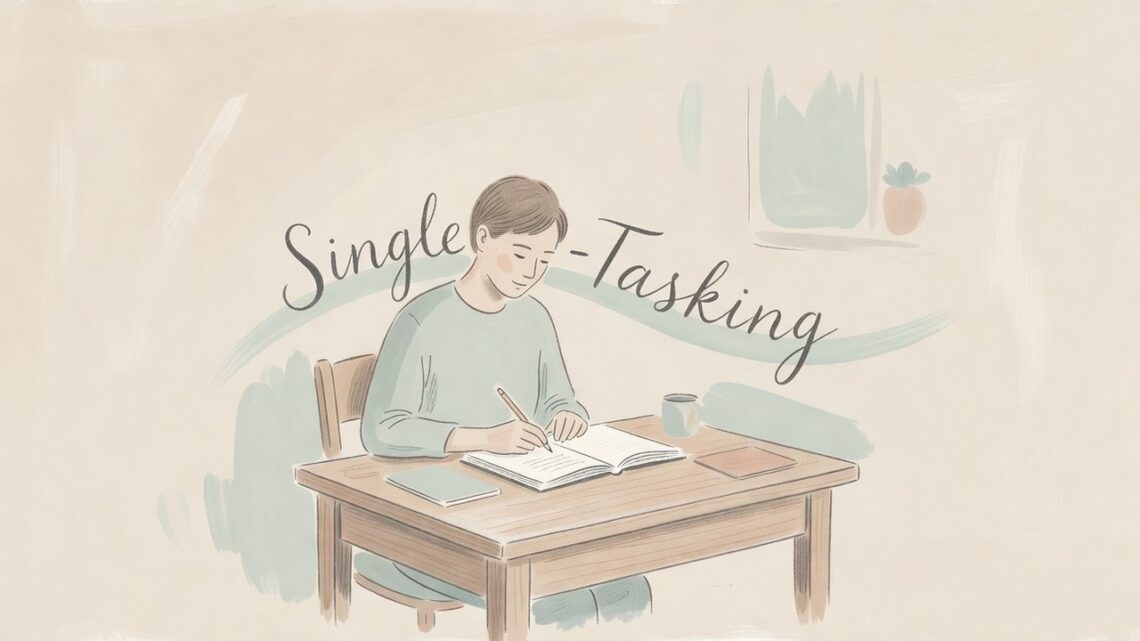
Single-tasking, sometimes called monotasking, means giving your full attention to one thing until it is done or you reach a natural pause. It’s the opposite of letting your attention hop back and forth between several tasks.
What people call multitasking is mostly rapid task-switching, not true parallel processing. The brain can’t focus on two things at once that both require concentrated thought, and each switch carries a small cost in mental energy and reorientation time.
The practical difference shows up in quality and in how you feel afterward. Writing a message while half-listening to a meeting means neither gets full attention. Finishing the meeting first tends to produce better results for both. Single-tasking isn’t about doing less. It’s about doing one thing well before moving to the next.
Why Switching Between Tasks Increases Stress and Mental Fatigue
Task-switching increases stress because each switch carries a mental reorientation cost, and those small costs accumulate across a full day into noticeable fatigue. Researchers call this a switch cost. Jumping between emails, calls, messages, and ongoing projects all day can leave you feeling depleted without a clear reason why.
Unfinished tasks add a background burden too. When several things are left half-done, your mind keeps a running list of what still needs attention. That mental load sits beneath the surface and contributes to a low hum of anxiety and overwhelm, even when you’re not actively working on those tasks.
Managing attention and reducing cognitive load are widely seen as meaningful parts of everyday stress regulation. Cutting down on how often you switch tasks is one of the more accessible ways to ease that load without changing your schedule entirely.
Single-Tasking: How Doing One Thing at a Time Lowers Stress Through Mindfulness
Single-tasking lowers stress by supporting mindfulness, the practice of paying attention to what is happening right now. When you focus on one task, it’s easier to notice what you’re doing and when you’re starting to tire or drift.
You don’t need a formal meditation practice to apply this. Making a cup of tea with your phone in another room is a form of single-tasking. So is reading a book without a podcast on. These moments of undivided attention fit into an ordinary day without any extra time.
When your mind wanders mid-task, gently bring your attention back to what’s in front of you. That small act of returning is the core of mindfulness. Present-moment attention is something you can build through ordinary moments rather than formal sessions. Single-tasking gives you those moments throughout the day.
Everyday Habits That Make Single-Tasking Easier to Maintain
A few small adjustments can open up real space for single-tasking without rebuilding your schedule.
Silencing your phone for even 20 to 30 minutes is one of the simplest starting points. It removes that pull before it happens. Closing browser tabs you don’t need cuts the temptation to drift, and clearing obvious interruptions before you start means fewer mid-task stops.
Limiting your daily priorities to three or fewer makes it easier to commit to finishing one thing before starting the next. A timer helps too: set it for one task and work only on that until it ends. Having a defined window is easier to sustain than an open-ended session. Monotasking is often praised for easing the burden on working memory, which can support both concentration and a calmer mental state.
Try This: Pick one task you need to do today. Silence your phone, close any tabs you don’t need right now, and set a timer for 20 minutes. Work only on that task until the timer goes off. When you’re done, pause for a moment and notice whether your mind feels a little lighter than it did before you started.
Single-Tasking in Home Life and Caregiving
Single-tasking applies equally to home tasks and caregiving, not only to work. The idea is the same: give one thing your full attention right now, and let the rest wait a few minutes.
Cooking dinner while actually cooking, rather than also scrolling messages or helping with homework at the same time, is a form of single-tasking. Meals often turn out better that way, and the experience feels less frantic.
For caregivers, single-tasking can be grounding when the day feels chaotic. Bathing a child, getting someone ready for the morning, or preparing a meal each feel more manageable when you treat it as the task itself rather than as an obstacle to something else. It tends to feel steadier than trying to manage everything at once.
How Single-Tasking Builds Focus and Reduces Overwhelm Over Time
Focus responds to practice. The more often you work on one thing at a time, the more naturally that habit settles in. Returning your attention when it drifts gets easier, and settling into a task takes less effort.
Finishing tasks fully, rather than leaving several half-done, creates a small sense of completion each time. Those moments add up across the day and shift how manageable a busy schedule feels. Overwhelm often comes not from too much work, but from the feeling that nothing is actually getting done. Finishing things one at a time is a direct way to push back on that.
If you work from home, a light structure helps a lot. A short planning moment in the morning, where you name your first task and give it a start time, helps you start the day with direction. Time-blocking, where each task has a defined start and stop point, doesn’t require rigid scheduling. Starting with a single blocked hour in the morning where you work on one thing only can change the feel of the whole day.
Single-tasking isn’t a dramatic overhaul or a system you need to follow perfectly. It’s a gentle shift in how you relate to your own attention. Turning off notifications for the next 30 minutes is enough to start.
Quick Takeaways
- Single-tasking means giving your full attention to one task at a time, which tends to feel calmer and less draining than constant task-switching.
- Switching between tasks carries a small mental cost each time, and those costs add up across a full day, contributing to stress and fatigue.
- Simple habits like silencing your phone, using a timer, and limiting daily priorities to three or fewer make single-tasking easier to maintain without a full schedule change.
- Finishing tasks one at a time builds a steady sense of progress and helps your ability to focus strengthen gradually over time.
Frequently Asked Questions
- What is single-tasking, and how is it different from multitasking?
- Single-tasking means giving your full attention to one task before moving to the next. Multitasking typically involves switching attention rapidly between tasks, which costs mental energy with each switch. Single-tasking reduces those switch costs and can leave you feeling less drained at the end of the day.
- How can single-tasking help reduce overwhelm on busy days?
- When you focus on one task at a time, your mind is not carrying the weight of several unfinished things at once. Completing one item before starting the next creates a sense of forward momentum, which can make a busy day feel more manageable and less scattered.
- What are some beginner-friendly ways to start single-tasking?
- Start small. Silence your phone for 20 minutes and focus on one task. Close browser tabs you don’t need right now. Choose no more than three priorities for your day and work through them one at a time. These adjustments can make a noticeable difference without any major change to your routine.
- Can single-tasking help when I work from home?
- Yes. Working from home often blurs the line between tasks and daily life, making sustained attention harder. Time-blocking, a brief morning planning moment, and turning off notifications during focused windows can give single-tasking the structure it needs in a home setting.
- Does single-tasking improve focus and concentration over time?
- Focus responds to how you practice it. Regularly returning your attention to one task builds a habit of sustained concentration. You may find that settling into a task gets easier, that distractions feel less urgent, and that you finish things more often than you leave them half-done.
Small habits rarely feel significant when you first start them, but single-tasking is one of those quiet shifts that tends to pay off steadily. Try giving one task your full attention today and see how different the rest of your day feels.
This article shares general wellbeing ideas for educational purposes only and is not medical advice. If you have a health concern, please speak with a qualified healthcare professional.