By Elena Hart · Wellbeing editor
TL;DR: Stepping outside for just 10 minutes can lift your mood, ease mental overload, and help you feel more focused. You don’t need a long hike or a quiet forest. Short outdoor breaks, taken regularly, add up to real everyday benefits.
Ten minutes outside can shift your mood, ease mental fatigue, and restore a sense of clarity. It can happen faster than most people expect. Fresh air feels good on its own, but the less obvious part is how reliably a brief step outside produces those changes.
What Research Says: 10 Minutes Outside Improves Mood and Cognitive Function
Research cited by University of Utah Health suggests that as little as 10 minutes outdoors can improve mood and support cognitive function. That’s a short investment: a walk around the block, a few minutes in a garden, or a quiet moment on a back step.
The benefits don’t require one long outing. They can build from shorter bursts spread across the week. A few brief outdoor breaks each weekday can add up to something real without needing a long weekend away or access to open countryside.
Longer time in natural settings may offer more than 10 minutes does, but 10 minutes is far more realistic and repeatable than 20 for most people. Consistency matters more than how long any one outing lasts.
Why Your Mood Shifts So Quickly When You Go Outside
A short time outdoors feels restorative partly because it interrupts mental overload. Natural sights, sounds, and movement engage the mind gently rather than demanding the focused effort that screen work or task lists require.
This is the basis of what researchers call attention restoration theory: natural environments help replenish the mental resources that everyday tasks use up. Most people notice that even a short outdoor break leaves them feeling a little lighter, even if nothing about their situation has changed.
Being outside has been linked with lower cortisol levels, reduced blood pressure, and lower feelings of anxiety, according to research summaries from sources including the American Heart Association. None of these shifts require hours in a forest. Regular, short outdoor breaks appear to add up.
Sunlight vs. Nature: What Each Contributes to Your Outdoor Break
Sunlight and natural settings contribute different things to how you feel outdoors. Morning light exposure helps anchor your body’s circadian rhythm, the internal clock that influences when you feel alert and when you feel ready to sleep. Getting outside early in the day, even briefly, may help your body settle into a steadier pattern through the hours that follow.
Natural settings, including tree-lined streets, parks, and small gardens, offer something else. A walk in a natural setting has been associated with lower stress, better thinking, and improved memory compared with a similar walk in a dense urban environment, according to research reviewed by Cornell University. The greenery, the variety of textures, and the relative quiet all seem to contribute.
Ideally, outdoor time combines both natural light and some contact with green or open space. If your options are limited, either one is still better than staying inside. A few minutes in direct daylight, even in a largely concrete setting, carries its own benefit.
How to Fit 10 Minutes Outside Into a Busy Workday
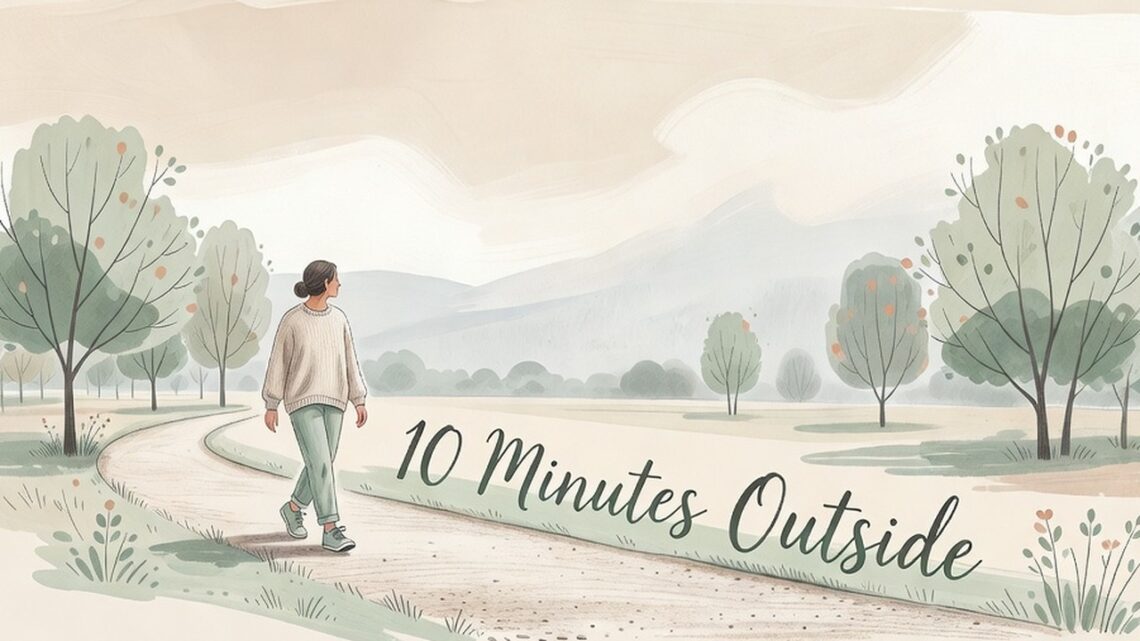
A short outdoor break during a busy workday works best when treated like a scheduled task. Step out after a meeting, before lunch, or when focus starts to drift. Even a brief walk outside can shift your mental state enough to make the next stretch of work feel more manageable.
If you work from home, pairing outdoor time with something you already do makes the habit easier to keep. Make a cup of tea and step outside before sitting back down, or take a short walk as a way to close one work block before opening the next. Attaching the break to a natural transition point means you don’t have to rely on willpower.
The Centers for Disease Control and Prevention and similar public health bodies recognise the link between physical movement and mental wellbeing. Framing a short outdoor walk as a reset rather than exercise tends to make it a habit you’ll actually keep.
Try This: When your next task ends, step outside for 10 minutes before moving on to the next one. Leave your phone inside, or at least pocketed. Notice three sounds around you, then look for something moving, a leaf, a bird, a cloud. No goal beyond being out there for a few quiet minutes.
Walking vs. Sitting Outside: Both Deliver Wellbeing Benefits
Sitting outside, gardening, and gentle stretching are all linked with wellbeing benefits alongside walking, according to research summaries. The shared factor is being outside, not the specific activity. You don’t need to be actively moving for outdoor time to count.
Walking does carry extra advantages. A short walk increases blood flow, gives your body a mild physical challenge, and can help clear the foggy thinking that builds up after long stretches of sitting. Research reviewed by Loughborough University suggests that a brief outdoor walk can support alertness and energy in ways that passive indoor rest often doesn’t match.
If walking isn’t for you, or isn’t possible right now, sitting quietly outside still makes a real difference. Natural light, fresh air, and a change of scene from your usual workspace all contribute. What matters most is simply being outside.
How Often to Go Outside and What to Expect Over Time
Consistency matters more than duration. A brief outdoor habit practised daily tends to build a more noticeable sense of calm and steadiness than a single longer outing taken once a week. Research summaries highlighted by the BBC and TIME suggest that regular, short outdoor breaks add up to real everyday gains.
If you’re just starting, aim for once a day and keep the bar low. A short walk around the block, five minutes on a balcony, or a few minutes in a garden all count. The goal is to make outdoor time a default part of the day rather than something to plan for or earn.
Changes tend to be quiet and gradual. Over days and weeks, many people find that their mood feels a little more stable, that small frustrations don’t land as hard, and that they sleep a bit more easily. That gradualness is actually what makes it stick.
Quick Takeaways
- Even 10 minutes outdoors can support mood and cognitive function, according to research cited by University of Utah Health.
- Benefits build up from short bursts across the week, so you don’t need one long outing to feel a difference.
- Both walking and sitting outside are beneficial. Movement adds extra advantages, but stillness outdoors still counts.
- Consistency matters more than duration. A short daily outdoor habit builds steadily over days and weeks.
- Natural light, green settings, and fresh air each contribute something, but any outdoor time beats staying inside.
Frequently Asked Questions
- What does the research say about 10 minutes outside versus 20 minutes?
- Research suggests that 10 minutes outdoors can already improve mood and cognitive function, and that longer time in natural settings may offer additional benefit. For most people with busy schedules, 10 minutes is a more realistic and repeatable starting point, and short, regular breaks appear to add up rather than needing one long outing to feel a difference.
- What kinds of outdoor settings give the biggest wellbeing boost?
- Natural settings with greenery, such as parks, tree-lined streets, and gardens, tend to be linked with the strongest benefits, including lower stress and better thinking. Even outdoor time in an urban environment still offers some benefit, though. You don’t need wilderness or large open spaces for a short break to help.
- Does sunlight matter as much as being in nature?
- Both sunlight and natural settings contribute to how you feel outdoors, but they appear to do slightly different things. Morning light helps anchor your body’s daily rhythm, while green spaces and natural textures seem to offer something of their own. When possible, combining natural light with a green setting is ideal, but either one still offers something useful on its own.
- Is sitting outside as beneficial as walking outside?
- Sitting outside is genuinely beneficial, and research summaries suggest that different outdoor activities, including walking, sitting, and gardening, are all linked with wellbeing benefits. Walking does offer some additional physical advantages, such as increased blood flow and improved alertness. If walking isn’t possible or appealing, sitting quietly outside still makes a real difference in how you feel.
- How often should I go outside to feel a difference in my daily mood?
- Daily outdoor time, even if brief, appears to be more effective than occasional longer outings, and consistency matters more than duration. Starting with once a day and keeping the habit simple, such as a short walk or a few quiet minutes in a garden, tends to build a steadier sense of calm over days and weeks. Don’t expect a single dramatic shift.
Small habits rarely feel significant in the moment, but a few minutes outside each day can quietly shift how the rest of your day feels. Start simple and give it a few weeks.
This article shares general wellbeing ideas for educational purposes only and is not medical advice. If you have a health concern, please speak with a qualified healthcare professional.