By Elena Hart · Wellbeing editor
TL;DR: Walking meditation turns an ordinary walk into a reset by replacing autopilot movement with gentle attention on your steps, breath, and surroundings. Even five minutes practiced this way can leave you feeling noticeably calmer.
What Walking Meditation Is, and How It Differs from a Regular Walk
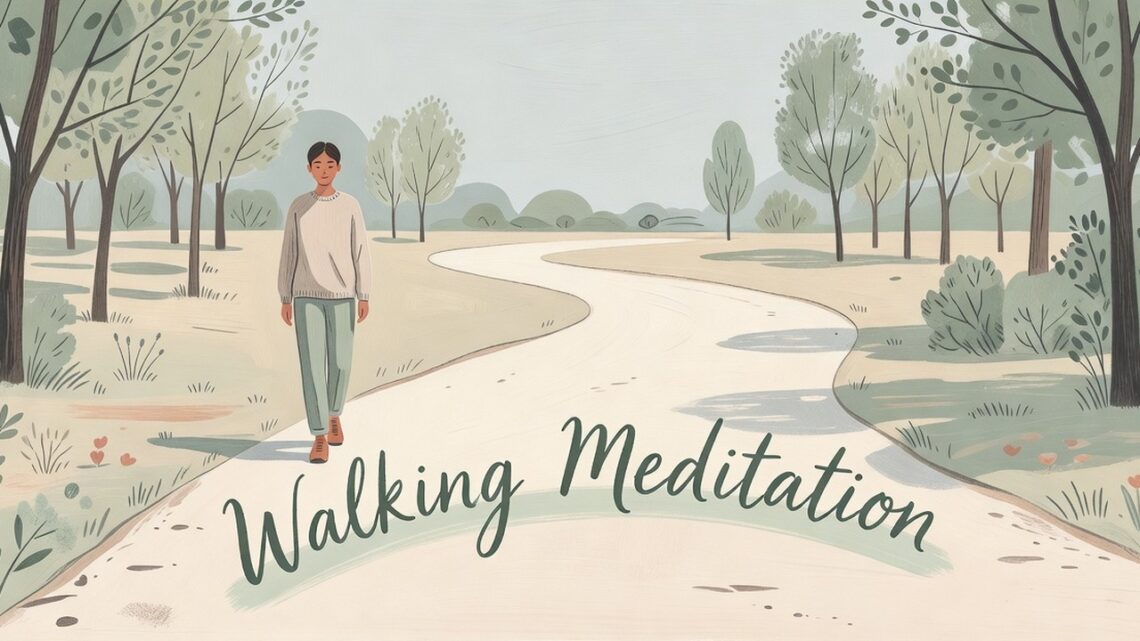
Walking meditation is the practice of placing deliberate, gentle attention on the physical experience of walking rather than letting the mind wander freely. In a regular walk, movement is background noise while awareness drifts to plans, worries, or a screen. In walking meditation, movement is the foreground: you notice the heel pressing the ground, the foot rolling forward, the toe lifting off, and bring your focus back there each time the mind pulls away.
You don’t need any gear, and no spiritual background is required. The practice has roots in contemplative traditions, including Buddhist mindfulness, but it’s simply a way of paying attention. What separates a mindful walk from a regular one isn’t what your body does but where your awareness goes.
Why Mindful Walking Makes a Practical Difference
Walking meditation layers onto something you’re already doing, so it doesn’t take any extra time carved from your day. Bringing attention to the physical experience of walking gives a restless mind something steady to hold, which crowds out some of the mental noise that builds through a busy day. Many people find a short, focused walk more restorative than the same walk spent scrolling or replaying problems.
Greater Good in Action at UC Berkeley describes walking meditation as a practice for developing present-moment awareness and a sense of connection with the body and the environment. The goal isn’t to empty the mind but to give attention a gentler, steadier place to rest for a few minutes.
How to Start Without Overcomplicating It
Walking meditation has no pass-or-fail condition: when your mind wanders, you simply notice and return focus to the walk. That quiet act of noticing and returning, without frustration, is the whole practice.
Start with a route you know well. A familiar path removes the mental effort of navigation, freeing you to attend to the experience itself. Aim for five minutes at first rather than thirty. Keep your posture relaxed and upright, pace comfortable and natural. If a small anchor helps, silently note “left” and “right” as each foot contacts the ground. Consistency matters more than technique at this stage: a five-minute walk practiced most days will feel more useful than a long, effortful session tried once.
A Simple 5-Minute Routine and How to Pair Breathing with Your Steps
A five-minute walking meditation has a loose shape: settle in with one breath, attend to your feet, widen attention to your surroundings, then loosely match your breath to your stride.
Before you set off, pause for one breath and let your shoulders drop. Spend the first minute or two feeling the heel make contact, then the ball of the foot, then the toes. A natural, easy pace is fine. When the mind pulls toward plans or worries, return to the sensation of your next step.
From there, gently widen your attention to sounds nearby, the air on your skin, and the light around you. Let your gaze stay soft rather than fixed on a point. In the last minute or two, try matching your breath loosely to your stride: inhale for two or three steps, exhale for two or three. Let the breath lead the count rather than force it. If the pairing feels strained, let it go and just walk. Verywell Mind notes that coordinating breath with movement is one of the simplest ways to keep attention anchored during a mindfulness walk. The steps and the breath often find their own rhythm once you stop managing them.
Try This: On your next walk, inhale for two steps and exhale for two. Do this for two or three minutes. When your mind drifts, notice and return to the count. No score is kept. Just see how you feel at the end compared to how you started.
Walking Meditation as a Workday Reset: Short Walks Between Tasks
Short mindful walks work well as transition rituals between tasks, turning time you already spend on your feet into a reset rather than a rumination. The walk between your desk and the kitchen, the route from the car park to the entrance, or a five-minute break between calls are each a small window to redirect attention. The walk is already happening; walking meditation changes what you do with it.
Outdoors tends to feel more restorative for many people. Natural settings give the senses more to absorb gently, from birdsong to a breeze or shifting light. Healthline notes that outdoor mindful walking pairs gentle movement with sensory engagement in ways that many people find calming and grounding. Indoors works equally well when the weather is poor or time is short: a corridor, stairwell, or the length of a room is enough space. On a commute, practice on familiar, pedestrian-safe stretches where you don’t need to think about where you’re going. A few minutes of attending to the body rather than the phone can shift how you arrive at your destination.
Why Walking Meditation Feels Grounding Rather Than Distracting
Anchoring awareness in physical sensation draws the mind into the present moment rather than into abstract thought, which is usually where tension lives. The mind generates unease by rehearsing future scenarios or replaying past ones. When you’re focused on the sensation of each step, that time-travelling mental chatter quiets a little. Not because you’ve fought it, but because attention has somewhere concrete and present to land. It’s a gentle redirection, not a suppression.
Walking meditation also works because it’s forgiving. Every time you notice your mind has wandered and bring it back without frustration, you’re practicing correctly. There’s no state to reach and no performance to maintain. That absence of a standard to meet is what makes it easier to return to than most daily habits.
Walking meditation doesn’t ask much of you. It just asks that you show up for your next walk a little differently, and see how that feels.
Quick Takeaways
- Walking meditation means bringing deliberate, gentle attention to movement, breath, and surroundings rather than walking on autopilot.
- You don’t need a special place or a long walk. Five minutes on a familiar route is enough to start.
- Matching your breath loosely to your stride is a simple, optional anchor for staying present during a mindful walk.
- Short mindful walks work well as transition rituals between tasks, during work breaks, or on a commute stretch you know well.
- When your mind wanders, returning your focus to your steps without frustration isn’t a failure. It’s the practice itself.
Frequently Asked Questions
- What is walking meditation and how does it differ from a regular walk?
- Walking meditation is the practice of bringing deliberate, gentle attention to the physical act of walking rather than letting the mind wander freely. In a standard walk, awareness is often elsewhere, on plans, worries, or a screen. In a mindful walk, the body’s movements and sensations become the primary focus, and attention is returned there gently each time it drifts.
- Do I need to walk very slowly for walking meditation to work?
- No. A natural, comfortable pace works well for most people. Exaggerated slowness can feel self-conscious, especially outdoors or in a shared space. The practice is about the quality of attention, not the speed of your feet. Some people find a pace slightly slower than their usual helpful at first, but there’s no fixed rule. Walk at a speed your body finds easy and natural.
- How will I know if I’m practicing walking meditation correctly?
- Walking meditation has no pass or fail condition. If you’re walking with some attention on your steps or breath and returning your focus each time your mind wanders, you’re practicing correctly. The practice is the repeated, gentle act of noticing and returning, and it stays the same whether your mind wandered once or a hundred times. Treating each session as a small experiment, rather than an assessment, tends to help.
- Can I use walking meditation when my mind feels especially busy or anxious?
- Walking meditation can be particularly useful when the mind feels unsettled, because focusing on physical sensation gives a busy mind a concrete place to land. A busy mind will wander frequently, and that’s expected. You don’t need to feel calm before you start. If anxiety feels persistent or significant, speaking with a healthcare professional is always a sensible and worthwhile step alongside any wellbeing habit.
- How often should I practice mindful walking to notice a difference?
- Consistency tends to matter more than frequency. A short mindful walk on most days often feels more sustainable than longer sessions practiced occasionally. Starting with five minutes a few times a week and building gradually is a manageable approach. Attaching the habit to something already in your routine, such as a lunch break or a commute stretch, makes it easier to maintain over time.
This article shares general wellbeing ideas for educational purposes only and is not medical advice. If you have a health concern, please speak with a qualified healthcare professional.